Eugenia Albats*: The former head of MI‑6, the UK's foreign intelligence service, was asked by the influential British magazine The Economist who currently has the advantage in the Middle East war, and he answered unequivocally: «Iran». What do you say, David?
 David Sharp: I disagree with him, and here's why. The fact is, this is a classic example of an outsider's assessment. Undoubtedly, Iran has taken some steps that have surprised many. From a political and economic standpoint, it has shaken the world significantly. And the President of the United States, naturally, has faced substantial pressure. Nevertheless, one cannot dismiss the purely military component, which is also directly linked to the economy and politics, primarily within Iran itself. From a military perspective, Iran has suffered and continues to suffer colossal damage. This damage is measured not just in tens of billions of dollars, but perhaps more; it is something much deeper. The Iranian leadership faced a very serious level of hatred and rejection from the majority of its people even before the war. Iran was experiencing a severe economic crisis, compounded by natural and other consequences like drought and other problems. What the war has brought to the Iranian regime is a staggering investment in everything related to the regime's future collapse. A collapse is not inevitable, but economic, political, and military problems will grow enormously. When it all ends, they will face alternatives and dilemmas they could not have imagined. In this situation, talking about an advantage is strange. The fact that they have not been overthrown and have held on can certainly be considered a victory by the authorities. But in terms of damage and prospects, their situation is extremely poor. And the fact that they are putting on a brave face, attacking neighbors, and blocking the Strait of Hormuz is far from a strategic victory, even if they manage to portray the United States in a poor light.
We must also remember another point: many today believe that the goal of the war (not the hope, but the actual goal) was to overthrow the regime. This is not the case. The regime was planned to be weakened, and it was hoped that it would be overthrown. The war was planned for about six weeks with a unilateral exit. If Iran does not allow this exit, it may achieve some political dividends by undermining the reputation of the President of the United States. But in any case, Iran's situation is very, very bad. I am not at all sure that the regime will survive in the short and medium term — the coming months and a couple of years.
Trump's Arguments
Eugenia Albats: The Wall Street Journal published a text at the end of last week stating that before the United States began The War of Choice against Iran, as many call it, the Chairman of the Joint Chiefs of Staff, General Dan Kane, warned President Donald Trump that if the Americans attacked Iran, Iran would likely close the Strait of Hormuz, through which 20% of the world's oil passes. According to the general, Trump heard his words but said he would start the war anyway because Tehran would likely capitulate sooner, and even if Iran tried to do so, that is, close the strait, the US military forces would be able to handle it. The second argument Trump made was that before Iran could block the strait, the people of Iran would take to the streets, as they did in January-February, and overthrow the regime. The New York Times also published material last week that it was Israeli Mossad that provided information suggesting that as soon as Iran was struck, a revolution would begin there. What do you say to that, David?
The Mossad report stated that if the necessary measures were taken, there was a high chance that within a period of several months to a year and a half, the Iranian regime would be under threat
David Sharp: I cannot comment on quotes, but I will note one thing. Dan Kane should have explained to Trump that closing the strait is not a serious measure that requires time. It is enough to simply declare that passing ships will be attacked, which can be done in exactly one minute if desired. Secondly, if the president tells the Chairman of the Joint Chiefs of Staff that the American military will handle it, then the general should respond: either «we cannot handle it», or «we do not want to do it», or «we cannot». If the chief military officer nods, it means he agrees. As for Mossad, it is not the first time The New York Times has shifted blame. Naturally, Mossad could not promise an uprising, and the head of Mossad and his entire staff should not be considered fools. Moreover, it is well known that nothing of the sort happened. The head of Mossad presented a report to the Prime Minister. High-ranking officials in America, including presumably Trump, were familiar with this report. The report stated approximately the following. If the necessary measures were taken, there was a high chance that within a period of several months to a year and a half, the Iranian regime would be under threat. There are no promises or specific deadlines here. Mossad is a serious organization, although it sometimes makes mistakes, but it is not in its style to make such irresponsible statements. Another point is that the President of the United States, naturally, can listen with interest to the opinion of Mossad and the heads of some governments and states, but in the end, he makes decisions based on how he sees his own interests and relying on information from American intelligence and security agencies.
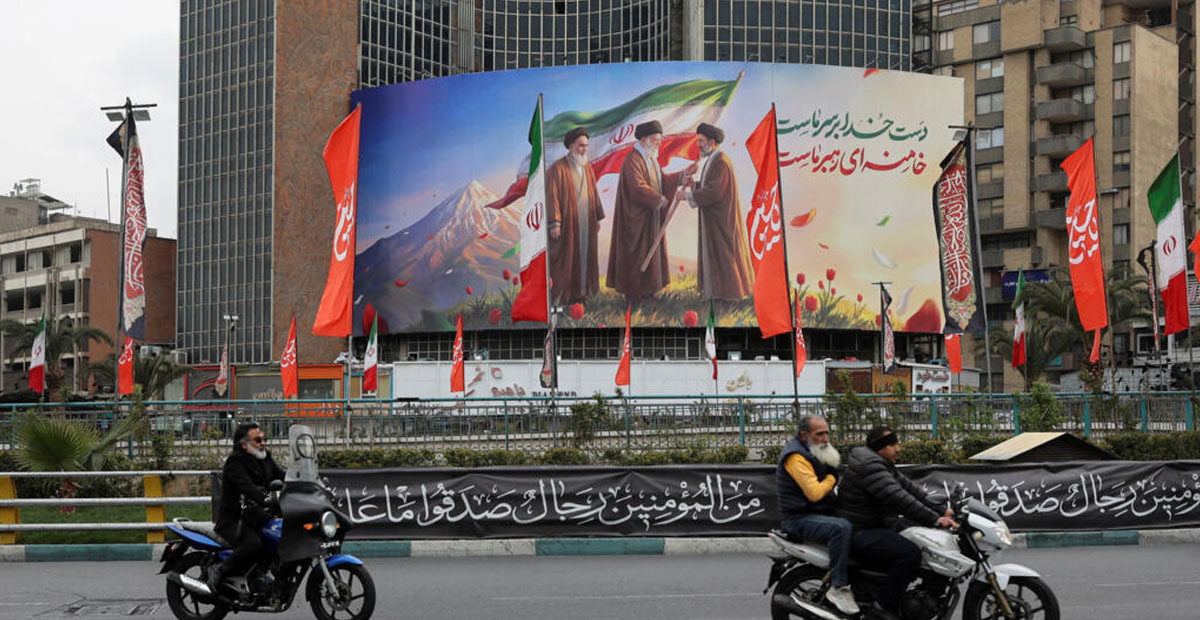
Tehran, March 10, 2026. Photo: REUTERS / Majid Asgaripour
Eugenia Albats: Unfortunately, in the United States, much is written about how Donald Trump does not listen too much to experts, including those from his own intelligence organizations, as he has long labeled them as the Deep State, a secret state working against him. Therefore, as American media write, Trump often makes decisions completely arbitrarily, based on his own ideas of right and wrong. But let's not discuss Trump; this is not quite our topic. Let's look at the Yemeni Houthis, who entered the war last week. And now the war is already being fought on three fronts: in Iran, in Lebanon, and from Yemen. Can the United States and Israel withstand a war on three fronts?
David Sharp: I would add the war in Iraq. In Iraq, there are hostilities between the Americans and numerous pro-Iranian militias. The official Iraqi army looks at this from the sidelines. The Americans use aviation, they use drones, not to mention arrivals from Iran itself. The Americans have eliminated several prominent figures in these very pro-Iranian militias, which operate openly in Iraq and are even part of Iraq's security forces. Sometimes the size of these structures is many thousands. And there are many of them, each with its own policy, some of them openly pro-Iranian. One of them is called «Hezbollah», like the Lebanese one, but it is a different organization. By the way, it is the most combat-ready and probably the most aggressive of all pro-Iranian militias. Here, militias refer to armed structures of certain parties. These are quite serious armed structures, having nothing in common with the Soviet militia.
The entry of the Houthis into the war is less of a threat to Israel or American military, but it is an opportunity to reach important Saudi targets with relatively close-range weapons
But let's return to the Houthis. I can immediately say that, of course, the US and Israel will withstand the Houthis' intervention. Nevertheless, they cannot be ignored. The Houthis hesitated for almost a month and did not enter the war. Honestly, I was sure that the Houthis, who demonstrated the greatest intransigence and insensitivity to losses in Israel's previous war, would be the first to enter the war now. No, it turned out that the lessons taught to them by massive bombings by the Americans and Israel had an effect. If the Houthis were indifferent to everything, they would have entered the war immediately, in the first minutes. But they weighed the pros and cons. Apparently, Iranian pressure and the feeling that things were not so bad led them to this decision. They have attacked Israel at the moment, and they have attacked with limited resources, one or two missiles every couple of days. This is an insignificant amount against the backdrop of Iranian shelling; in fact, it adds nothing to Israel. However, it can add troubles to global shipping and, in particular, to Saudi Arabia. Saudi Arabia has begun transporting a significant portion of its oil not through the Strait of Hormuz, which is de facto closed, but through the Red Sea. Today, 2/3 of Saudi Arabia's oil goes through a pipeline to the port of Yanbu on the Red Sea. They have sharply increased the functionality of this pipeline since the start of the war. Accordingly, tankers can head to their destinations through the Bab-el-Mandeb Strait. In fact, the Houthis, by attacking Israel, are warning the Saudis: «Do not provide your airspace to the Americans. Do not enter the war on the side of the Americans and Israel. Otherwise, we can seriously disrupt shipping in the Red Sea. Then ships will have to go around Africa, and the Suez Canal will suffer again». Egyptian President Assisi literally begs Trump to do everything to stop the war. In general, the entry of the Houthis into the war is less of a threat to Israel or American military, but it is an opportunity to reach important Saudi targets with relatively close-range weapons. But so far, we have not heard about attacks and have not heard that they are taking these steps. If they start doing this, they can cause damage to the Saudis, but then the Saudis will understand that the Houthis are a thorn that needs to be removed at any cost.
Eugenia Albats: But they tried, David, there was a war between Saudi Arabia and Yemen, with the Houthis. And as I understand it, despite all the efforts of Saudi Arabia, the Houthis remained where they were.
David Sharp: Yes, to a noticeable extent. But some things have changed. Firstly, the Saudi coalition managed to achieve great success in the early stages of the war and drive the Houthis out of Southern Yemen to the north. Further, without the help of the southerners, they could not advance, especially since the Houthis and Iranians began hitting their important infrastructure facilities.
How Many Missiles Does Iran Have?
Eugenia Albats: Now we see that Donald Trump is calling on Arab states to join this war, but so far this is not happening, despite Iran continuing to shell its neighbors with missiles. And in this regard, I have a question about Iranian missiles. According to Reuters, the United States is confident that they have destroyed a third of Iran's missiles. Another third is seriously damaged, or they are buried under rubble in underground tunnels and bunkers. Israelis write that Iran had 2,500 ballistic missiles, and they have launched 500 so far during the month of war. It turns out that Iran still has 2,000 ballistic missiles and plus an unknown number of long-range missiles. Do Israel and the United States have an idea of how many missiles Iran still has? Where were they able to hide them, which, as they write, was somewhat of a surprise for the United States and Israel?
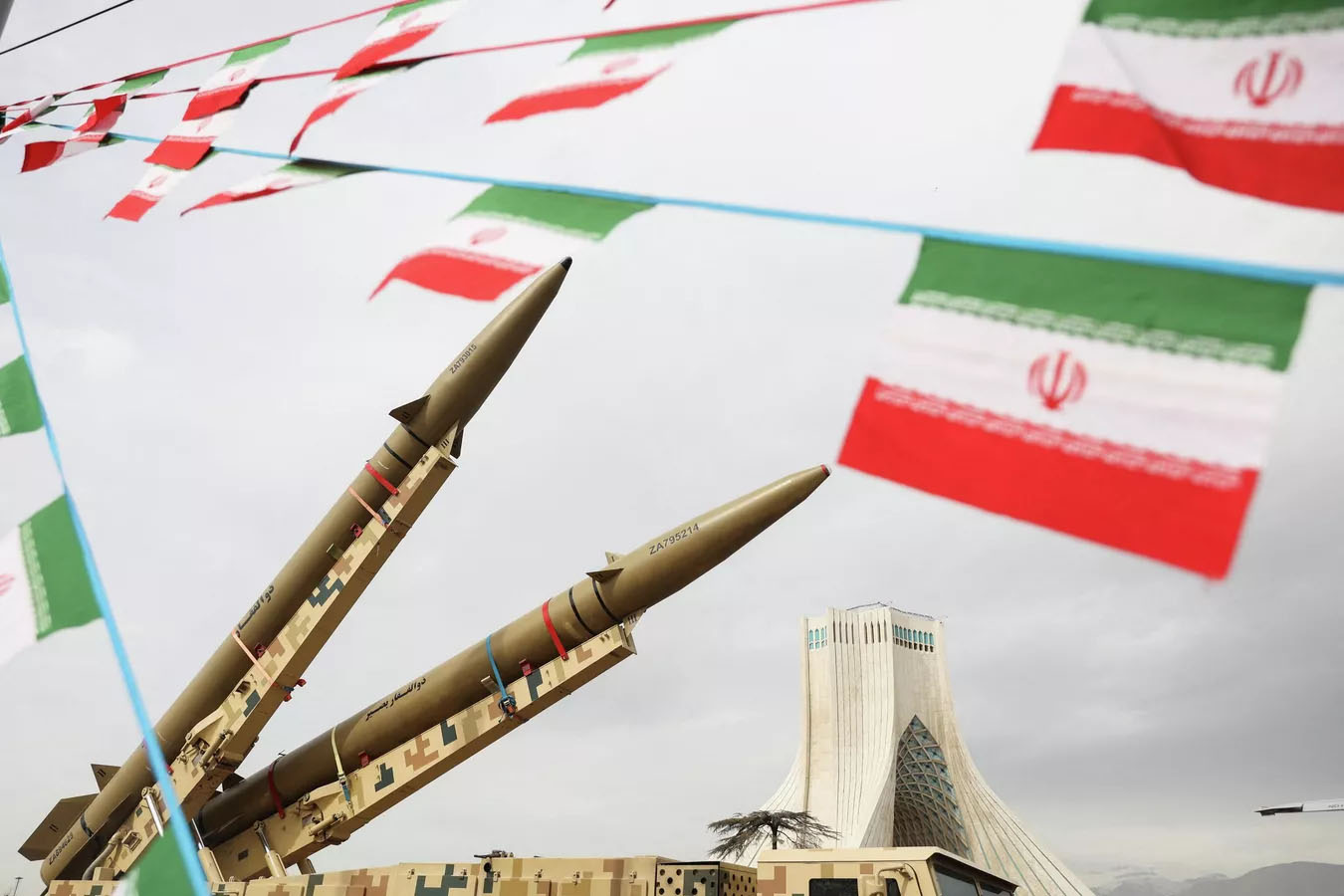
Missile complex in Tehran. Photo: REUTERS / Majid Asgaripour
David Sharp: No, for the military, this was not a surprise. This is an issue that has been dealt with for many years; for Israel, it was a priority. They knew well about Iran's plans and preparations for war from the perspective of the missile program and understood that it was impossible to destroy the entire arsenal with airstrikes. Reuters' information is roughly the estimates currently held by US and Israeli intelligence. Everything is approximately correct here. A third of the launchers or missiles are destroyed. Another plus-minus third is sealed in underground cave cities that cannot be destroyed from the air. You can block the entrances, hit the ventilation holes, destroy the access roads, and constantly prevent the enemy from digging out these exits.
Eugenia Albats: Where are these shelters located?
David Sharp: Mainly, if we are talking about medium-range ballistic missiles aimed at Israel, they are located in Western and Central Iran, in cave cities of mountain ranges, where missiles with a range of up to two thousand kilometers are based. The missiles intended for Saudi Arabia, other Arab neighbors, and American bases are in mountain ranges closer to the Persian Gulf. What is happening now implies a hunt for missiles and launchers that have come out, a hunt for those warehouses that are kept outside to charge them, and attempts to continuously prevent the missiles from exiting the tunnels by blocking them. If we proceed from this situation, the results are actually very good. The Iranians worked for decades to ensure that their missile potential was resilient. This implied the creation of a huge number of underground fortified areas, the camouflage of missiles that are outside. There are a huge number of installations used for shelling Israel. According to our intelligence estimates, 470.
By the way, regarding intelligence. Intelligence is people, and they do not always have accurate information. They draw conclusions based on sometimes indirect evidence. Initially, in Israel, it was believed that Iran had fewer launchers than 470. The estimate of their number «floated», and in the end, during the war, they concluded that there were somewhat more than expected. While they usually like to assume conservatively, that is, they show a bad scenario so that later they are not reproached for underestimating the enemy. The same goes for the numbers. The minimum estimate of missiles reaching Israel before the war was 1,800, the maximum approached 3,000. Therefore, today in Israel, the estimate is approximately as follows: 100 with something actively operating launchers and from 1,000 to 1,000 with something missiles in stock. At the same time, some launchers or missiles may become active if they emerge from the mountain blockage.
Missiles that reach American and Arab targets are different, less long-range missiles. And there is a similar situation, tens of percent destroyed, tens blocked. A few days ago, there was a publication that the Americans are mining anti-tank mines in the areas of missile deployment, an attempt to prevent the excavation of blockages with construction engineering equipment. That is, to make it difficult for the Iranians to carry out missile attacks. This is a very hard constant work that leads to a reduction in the number of attacks. The military says that it was possible to reduce the scale of attacks compared to the peak by 80–90%. This is a huge figure. The Iranians, when planning their actions against the US and Israel, assumed that they would be able to launch much more. Today, an average of 10 to 20 missiles fly to Israel per day. If there were 30 to 60, as the Iranians wanted, it would be much worse.
Eugenia Albats: The oil refinery in Haifa was hit today; did it come from Lebanon or Iran?
David Sharp: There was simultaneous shelling, alarms sounded from the Iranian direction, and «Hezbollah» attacked that very area. I would assume that something small from «Hezbollah» hit. It hit a fuel tank. It was not a serious damage, the plant did not stop operations, the fire was extinguished. They see this plant as a priority target. From the Lebanese border, it is located in a straight line about forty kilometers away and is quite reachable for relatively short-range missiles. One of the tasks of the Israel Defense Forces is to push back short-range missiles, at least so that they cannot reach Haifa and its surroundings.
Eugenia Albats: And what now poses a greater threat — missiles from Iran or drones?
David Sharp: It depends on who. But in any case, I believe that ballistic missiles pose a greater threat. For Israel, if we look from our perspective, drones from Iran pose almost no threat. It is an annoying factor that slightly interferes with life and distracts resources, but nothing more. I don't have the latest statistics, but over the month, it's probably less than 500. And all this is intercepted at quite distant approaches, with rare exceptions at the border. Israel has very well-established drone defense. And most importantly, distance plays in Israel's favor; they can meet them in advance. Therefore, the Iranians use drones to the maximum against their close neighbors. Here, distance works in their favor, and neighbors are less prepared. Ballistic missiles also work; shooting them down is difficult, even if you have an 80–90% success rate, as the Emiratis claim. For an important target, they will launch, if necessary, 10 or 20 missiles. And since the targets are often extremely delicate, for example, petrochemicals, one missile may be enough. For some targets, drones are also sufficient, especially since they are cheap and not always shot down. A striking example of a combined Iranian attack is on American military bases and facilities, where there were a number of failures and mistakes, and accordingly, significant damage, mainly material.
Eugenia Albats: But also human, people were injured and killed there.
David Sharp: There was a very serious incident in Kuwait, it hit the place where the logistics unit personnel were located. In Saudi Arabia, a couple of times they hit very valuable American assets, and there were also strikes on early warning radars at the initial stage of the war. Israelis have also faced such mistakes over the past few years.
Supplies from Russia
Eugenia Albats: Who helps Iran?
David Sharp: By and large, no one helps. At least from what I know.
Eugenia Albats: But it was written that Russia provides its satellite reconnaissance data.
David Sharp: I specifically emphasized — by and large. If we look back at past wars or the Cold War era, whether it's the Arab-Israeli conflict or the wars in Korea and Vietnam, we remember how the United States or the Soviet Union helped someone. But that was massive assistance: weapons, advisors, airlifts. Nothing like that is happening now with Iran. There is a fairly restrained attitude from China, and, of course, military-technical cooperation between Russia and Iran continues. And some intelligence information is probably being provided. But what can I say? Even under the current administration, the Americans supply intelligence to Ukraine, very valuable information, thanks to which many Russian targets are destroyed, perhaps on a daily basis, both tactical and deep. I do not think that the intelligence Russia can provide to Iran is anywhere near as valuable as what the Americans provide to Ukraine. But there is some help from Russia. I want to remind you that before the war, there were repeatedly proven cases of Russian arms supplies to Iran and various deals. For example, just weeks before the war, Mi-28 helicopters, purchased quite a long time ago, finally appeared in Iran. Immediately after the twelve-day war, Iran purchased «Verba» portable anti-aircraft missile systems, the latest Russian systems for hitting aircraft at low altitudes, for 500 million euros. But the execution of this deal is in 2027, unless Russia delivered some small experimental batch to Iran before the war. Recently, footage from Iran surfaced when an American carrier-based aircraft Super Hornet was operating at low altitude in southern Iran, and a missile hit it, the aircraft miraculously survived and left. Apparently, it was damaged, it was almost shot down. In my opinion, the risk was absolutely unjustified: to shoot at some secondary object with a cannon and risk getting a MANPADS in the side is not a very wise choice. If the Iranians had a more modern MANPADS in this case, I'm afraid the plane would not have left. Well, it was lucky.
The Israeli and US Air Forces fly freely over Iran. When an American pilot, having gained audacity, descended and fired at something with a cannon, believing that nothing could reach him, this is a telling example
Eugenia Albats: The President of the United States has said a lot about how Iran no longer has air defenses, no longer has a navy, etc. Nevertheless, it turns out that Iran probably still has more than a thousand ballistic missiles. How much power does Iran have left to wage this war?
David Sharp: Ballistic missiles are a special case. Neither the Americans nor the Israelis in military structures have said that things are going well with ballistic missiles. On the contrary, Reuters' information is roughly correct, precisely because the Iranians' ballistic potential is their main trump card. They worked on its resilience. It is difficult to work on the resilience of an air defense system. An air defense system must protect. If it operates in an ambush mode and is hidden somewhere, it can partially preserve itself, but it does not preserve the objects it is forced to protect. And therefore, when Trump says that the Iranians have no air defenses, he is somewhat right. According to real military assessments, 80–85% of air defense systems are destroyed. The rest either hide or operate in ambush mode. Therefore, the Israeli and US Air Forces fly freely over Iran. The example I gave, when a pilot, having gained audacity, descended and fired at something with a cannon, believing that nothing could reach him, is a telling example.
The same can be said about the navy. But here the point is that the large Iranian navy — large landing ships, corvettes, frigates — the Americans have indeed practically destroyed. However, strangely enough, from the point of view of closing the Strait of Hormuz, it posed the least threat. It is no match for the Americans at all. But what is a threat to commercial shipping and even to the Americans in the narrow straits is coastal means, what is on the shore, and unmanned boats, the «mosquito fleet» of suicide bombers, up to motorboats. To destroy this fleet, it is necessary to eliminate literally all remotely controlled motorboats, as well as coastal anti-ship missiles.
That is, a lot has been achieved. A lot has been achieved in everything related to the missile industry; the Americans and Israelis have taken seriously the destruction of the entire production chain. Recovery will take the Iranians a lot of time and resources. But the Iranians are a special case. The regime and those fanatically loyal to it possess serious resilience. One cannot count on them running away or disbanding themselves. One cannot rule out that they may go for a long war of attrition, will create obstacles to shipping in the Strait of Hormuz, even if the Americans unblock it, and at the same time will carry out shelling of Israel's neighbors in a slow-fire mode. But in this case, at some point, Iran will suffer a complete collapse in terms of economy and resources. The Americans are now restraining Israel, partly because they are concerned about Arab resources, about the Strait of Hormuz. But Israel, if it is constantly shelled and refuses to cease fire, will not tolerate it for long. It will destroy the Iranian infrastructure, without which the regime will be left without means of existence.
And purely technically, if you are determined and have something to shoot with, you can continue. How many months will the power last? There is not much, but to spoil the business atmosphere in Dubai, it is enough for one drone to fly into a glass building every few days, and another to sometimes hit some large canister of gasoline on the shore, which will burn very beautifully. Israelis know how exhausting this is and how it affects the normal atmosphere of life.
Eugenia Albats: How many months can this drag on?
David Sharp: Theoretically, they can shoot for months, but I don't think they will be allowed to. Very significant measures will be taken against them.
Landing on the Islands
Eugenia Albats: The 11th Marine Expeditionary Battalion of the US Marines left San Diego a couple of days ago. It left, as reported by American media, 3 weeks ahead of schedule. Parts of the 82nd Airborne Division are also preparing for deployment. Does this mean, in your opinion, that the Americans are preparing for a ground war in Iran?
David Sharp: Yes, it means they are preparing. It does not mean that the Americans will start these hostilities. Strictly speaking, everything depends on Trump, how he decides.
Eugenia Albats: Then why is the 11th Marine Expeditionary Battalion of the US Marines heading to the shores of Iran?
David Sharp: Because they are preparing. In general, I believe that a mistake was made in planning the operation in the sense that forces capable of acting on the ground were not initially deployed to the region. You may not want to use them, but it is important to have this tool if the need arises, so as not to act later in a fire-fighting mode.
Eugenia Albats: Has such a need already arisen? Will the Americans land their marines on Iranian soil?
David Sharp: Firstly, the 31st Expeditionary Unit is already in place. The 11th is still sailing, and it has a long way to go, but the 31st is in place, combat-ready, located in the region. Parts of the 82nd Division are already in the region. And they can very quickly add special forces, part of the 75th Ranger Regiment, and the Navy Seals special unit. Everything is in place. This gives the US president and military command on the ground the ability to solve local ground tasks. I emphasize, local. Roughly speaking, to capture islands for a comprehensive operation to unblock the strait, a ground component is necessary. Or to capture Kharg Island, where the oil terminal is located, so that it becomes a bargaining chip with Iran.
There are talks about a fantastic plan to capture enriched uranium deep in Iran with the aim of exporting it, but I have no reason to think that such an operation is feasible. Perhaps the intelligence agencies have something, but in theory, it looks unlikely. It's too special. And even more ridiculous when it is discussed in the press at the level of announcing the operation. I think this is part of psychological warfare; they are simply trying to scare the Iranians so that they divert their resources to guarding this facility. So the Americans are theoretically ready for the operation now, but it should not imply an immediate assault. It should imply, if such a decision is made, airstrikes to neutralize the defense on the islands. Some of this has already been done. And then the assault as readiness allows.
When and why will this be decided? It seems to me as follows. If Iran does not refuse to blockade the Strait of Hormuz, then for Trump and the United States as a whole, this situation will look unacceptable from a political and strategic point of view. When Iran continues to dictate its terms, the US must change this situation in one way or another. Some steps need to be taken for this. Trump himself spoke about some steps when he announced strikes on Iran's energy sector. The second option is forceful measures, unblocking the strait. This operation is quite feasible, although there are some nuances. And finally, Kharg Island as a bargaining chip. The Americans already have these tools in place, and they are being strengthened. By the way, there is also the aircraft carrier «George Bush», which will also be in the region by the end of this week. This will enhance the aviation component. Plus, land-based aviation aircraft are being transferred; additional F‑35 have arrived in the region. And in Europe, F16 are waiting for a signal. All this is to have the opportunity to unblock the strait. In such an operation, constant air presence over the continental part of Iran near the strait and over the sea is necessary to ensure the safety of those who will actually be involved in the unblocking and will conduct convoys. So if Iran does not show flexibility, I assess the chances that the Americans will go for local operations with a ground component as quite high.
Eugenia Albats: You said there are some «buts» in the situation with unblocking the strait. What are these «buts»?
If the Iranians from deep within the territory, in one way or another, try to reach the tankers that are a few kilometers from the shore and can be targeted with ballistic missiles or drones, then one hit is enough for ship owners, crews, insurers to conclude that the danger remains. For civilian shipping, almost zero risks are needed
David Sharp: There is a big difference between military and civilian ships. From a military point of view, the Strait of Hormuz can be unblocked so that American military ships pass through it with not very high risks. It's another matter for civilian shipping. By and large, unblocking is needed not only for victory over Iran in this local battle but to restore civilian shipping. And if the Iranians still, from deep within the territory, in one way or another, try to reach the tankers that are a few kilometers from the shore and can be targeted with ballistic missiles or drones, then one hit is enough for ship owners, crews, insurers to conclude that the danger remains. For civilian shipping, almost zero risks are needed. Otherwise, the problem is not solved.
When Will the War End?
Eugenia Albats: Last week, approaching the press, Donald Trump said that the war would end very soon, very soon, only a few targets remain. Last Friday, he stated that the war would end when he feels it should end. However, American officials, in private conversations with journalists, say that more marines and ships will be sent to the region, and they expect the war to last weeks, if not longer.
How do you think, can Trump now or in the near future declare that he has won the war, everything is wonderful, and leave? Or should we expect the war to last weeks, if not a month?
David Sharp: When planning, it was assumed that the air operation would last 4–6 weeks. We are now in the middle of this period between four and six weeks. However, it is important that such a duration of the campaign was envisaged under two circumstances. Either Iran agrees to a major deal with the United States in the spirit of the demands made in the negotiations, or it does not agree but simply ceases fire, and everything resolves itself, as in twenty-five. That is, Iran, its already renewed leadership after being severely beaten, finds itself alone with its people and the most severe problems. This was roughly the scenario. But, as we see, something has changed. Iran shows that despite the most severe situation, it wants to teach a lesson to the United States, the entire region, and the whole world, so that later it is not touched. From Israel's point of view, for example, there is no particular problem. If the fire ceases, it is necessary to bomb as many targets as planned. If Iran continues, then we continue. But what to do from the point of view of the United States? The situation when the Americans have finished the operation, and Iran continues, is unacceptable. If Iran were ready to leave the strait alone, Trump could end the war in a couple of days. And I would not be surprised if this suddenly happens because this was roughly the preliminary plan. If not, the Americans will be forced to act to unblock the strait, and there as the card lies. This strategy of Iran, when they show that they have nothing to lose, you can destroy everything for us, but we will also bring you serious pain, is problematic. It is here that Iran seems to win because, having taken others hostage, it remains in relative safety — I mean its energy infrastructure. At the same time, it hits foreign infrastructure in a limited mode and holds the world economy by the throat. This paradigm needs to be changed. Iran must be practically made to understand that since it has nothing to lose, it will really lose. And let's see if they have, excuse my expression, the testicles to risk losing literally everything.
The decision here is up to Washington. As I said, the situation where the picture looks like Iranian control over the strait is unacceptable for a superpower.
Eugenia Albats: And thus, what do you think — how much longer will the war last?
David Sharp: I give a certain chance that the decision will be within the planned framework, but more chances that the war will last several weeks. This is my feeling. Theoretically, it cannot be ruled out that Iran will seize the opportunity to teach everyone with a protracted war of attrition. I would say this. About 20% for everything to end soon; about 50% that many weeks, a month with something within the framework of American assaults. And another percentage that the Iranians will try to drag the war on for another month or two or three. In this case, very decisive measures will be taken against them. But here we are getting too far ahead...
Video Version
* Eugenia Albats, David Sharp have been declared «foreign agents» in the Russian Federation.